
 Search Engine Optimization
 Google Maps Ranking
 Google Ads
 Meta Ads
 Microsoft Ads
 SEO Websites
 AI Websites
 AI Blog
 AI Guides
 Chiropractors
Google Local Services Ads vs Google Ads: Which One Should a Local Business Run?
If you own a plumbing, HVAC, roofing, electrical, or similar service business, you have probably been pitched on both Google Local Services Ads and standard Google Ads, often by someone who has a reason to prefer one. The comparison of Google Local Services Ads vs Google Ads matters because the two products look similar on the search results page but work very differently underneath: they price leads differently, qualify businesses differently, and give you very different levels of control.
This guide breaks down how each one works, where each one wins, and how to decide what to run. For many businesses the honest answer is both, but the order and budget split matter.
What Are Google Local Services Ads?
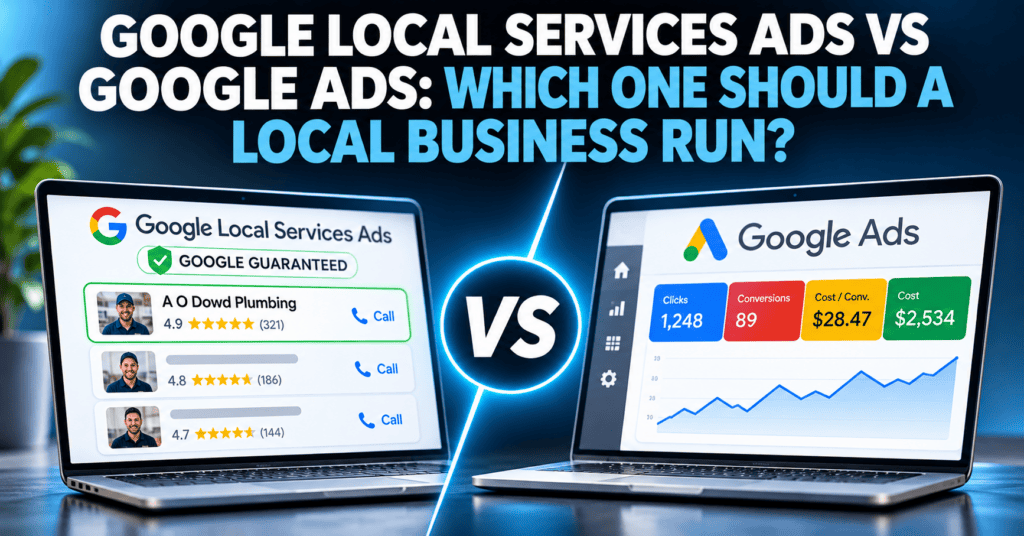
Local Services Ads, usually shortened to LSAs, are Google’s pay-per-lead product for service businesses. They appear at the very top of the search results for many local service searches, above standard text ads, often with a green “Google Guaranteed” or “Google Screened” badge depending on the category. Instead of showing a headline and description, an LSA shows your business name, star rating, review count, service area, and a call button.
The key differences from standard ads:
You pay per lead, not per click. You are charged when a customer contacts you through the ad by phone call or message, not when someone merely clicks. Lead prices vary by category and market.
Google verifies you first. To qualify, you generally go through background checks, license and insurance verification, and identity confirmation. That process takes time, but it is the source of the trust badge customers see.
You do not choose keywords. Google decides which searches your ad appears for based on the job types and service areas you select.
Ranking leans on reviews and responsiveness. Proximity to the searcher, review quality and volume, and how quickly you answer or reply all influence your position, along with your budget.
What Is Standard Google Ads?
Standard Google Ads, the search campaigns most people know, work on a pay-per-click auction. You choose keywords, write ad copy, set bids and budgets, pick locations, and send traffic to a page on your website. You are charged when someone clicks, whether or not they ever call.
That structure gives you far more control. You can target specific services, exclude searches you don’t want, test different messages, schedule ads for certain hours, and send each type of search to a dedicated landing page. It also demands more management, because wasted clicks add up quickly when campaigns are poorly structured. Our approach to Google Ads management centers on this kind of structure: tight keyword groups, negative keywords, call tracking, and landing pages built to convert.
Google Local Services Ads vs Google Ads: Side-by-Side
Cost Model
LSAs charge per lead. Standard ads charge per click. Pay-per-lead sounds safer, and in many cases it is, because you are not paying for clicks that never turn into contact. But a lead is not the same as a booked job. You can still pay for calls that are wrong numbers, outside your service area, or from people shopping on price. LSAs include a dispute process for invalid leads, and it is worth using it.
Standard ads can be cheaper per lead when well managed, or far more expensive when not. The variance is wider, and so is the upside.
Placement and Visibility
LSAs generally sit at the top of the page, above standard ads, which gives them prominent placement on mobile where most urgent local searches happen. Standard ads appear below them but can also appear across a wider range of searches, including research-phase queries that LSAs may not show for.
Control and Targeting
This is the biggest practical difference. With standard ads you decide which searches to bid on, what the ad says, and where the click lands. With LSAs, Google controls most of the presentation. If you want to emphasize a high-margin service, run a seasonal promotion, or segment your budget across job types, standard ads give you the tools.
Lead Quality
LSA leads tend to be phone calls from people ready to talk, because the format pushes toward a direct call. That can mean high intent. It can also mean a high number of price shoppers calling several LSA advertisers in a row. Standard ads funneled through a well-built page and a form or tracked number can filter more effectively, but only if the page and offer are strong.
Speed to Launch
Standard ads can be live in a day or two. LSAs depend on the verification process, which can take days or weeks. If you need leads quickly and are not yet verified, standard ads usually get you moving first.
Dependence on Reviews
Reviews are central to LSAs. A business with few reviews or a low rating will struggle to hold a top position no matter how much it spends. Standard ads let you compete with a smaller review profile because the ad copy and offer do more of the work. Either way, building review volume improves results, which is why review management pairs naturally with paid search.
When Local Services Ads Are the Better Choice
LSAs tend to make the most sense when:
You are in a category and market where they are available. LSAs are offered for many home service and professional categories, but availability varies, so check your trade and service area first.
You already have strong reviews. A healthy rating and review count directly improve your ranking and lower your effective cost.
You can answer the phone fast. Responsiveness is a ranking factor, and leads are phone-heavy. Tools like AI-powered lead follow-up help when you can’t answer every call yourself.
You want a simple, low-maintenance channel. With fewer settings to manage, LSAs are easier to run, though they still need attention to budgets, service areas, and lead disputes.
When Standard Google Ads Are the Better Choice
Standard search campaigns are usually the stronger option when:
You sell high-ticket or specialized services. Roof replacement, whole-home systems, and solar installs benefit from targeted keywords, dedicated landing pages, and messaging that educates before the call.
You want to control which jobs you get. If you want commercial work, a specific brand, or only projects above a certain size, keyword and ad control matter.
You need to drive traffic to your website. Standard ads build retargeting audiences and generate data you can use across the rest of your marketing.
You aren’t eligible for LSAs yet. A new business without the required licensing, insurance, or review history can still compete with standard ads.
Why Many Businesses Should Run Both
The two products are not mutually exclusive, and they don’t fully overlap. LSAs capture ready-to-call homeowners at the very top of the page. Standard ads capture a broader range of searches, support specific offers, and feed your website. Running both often means occupying more of the first screen, and the combined view can show you which channel produces better jobs for the money.
A sensible approach is to start with the channel that fits your current situation, track results by booked job instead of by lead, and shift budget toward whatever performs. For example, a business with strong reviews and an existing LSA account might add a small standard campaign aimed at its most profitable service, then expand based on results.
What Makes Either Channel Pay Off
Whichever you choose, paid search is only as good as what happens after the click or call. Three things decide whether you make money:
Response Speed
A lead you pay for and answer in an hour is worth less than the same lead answered in a minute. Automated text back and instant follow-up turn paid leads into booked jobs at a much higher rate.
Tracking
You should know which ads produce calls, which calls produce jobs, and what each job is worth. Without tracking, you are guessing. Platforms are only as useful as the measurement behind them.
Your Organic Presence
Paid ads work best alongside strong organic visibility. When a customer sees your ad, then finds your Google Business Profile with great reviews, then sees your name recommended in an AI answer, trust compounds. That is the idea behind combining paid traffic with Google Business Profile optimization and AI search optimization: each channel makes the others more effective.
Questions to Ask Before You Spend
Before committing budget to either option, run through a short checklist:
What is a booked job worth to us? Your maximum acceptable cost per lead depends on your close rate and average job value.
Can we answer fast enough? If not, fix that first, or you will pay for leads that go to competitors.
Who is tracking results? Make sure someone reviews booked jobs, not just clicks or leads.
Are our reviews and profile ready? Strong social proof lowers costs and raises conversion on both channels.
If you are unsure where to start, a free look at your current visibility is a good first step. Get Your Free Visibility Report to see how your business appears in Google and AI search, and then talk to our team about building a paid and organic plan that fits your market.